 da Re-Fit
VARICOSE VEIN SURGERY
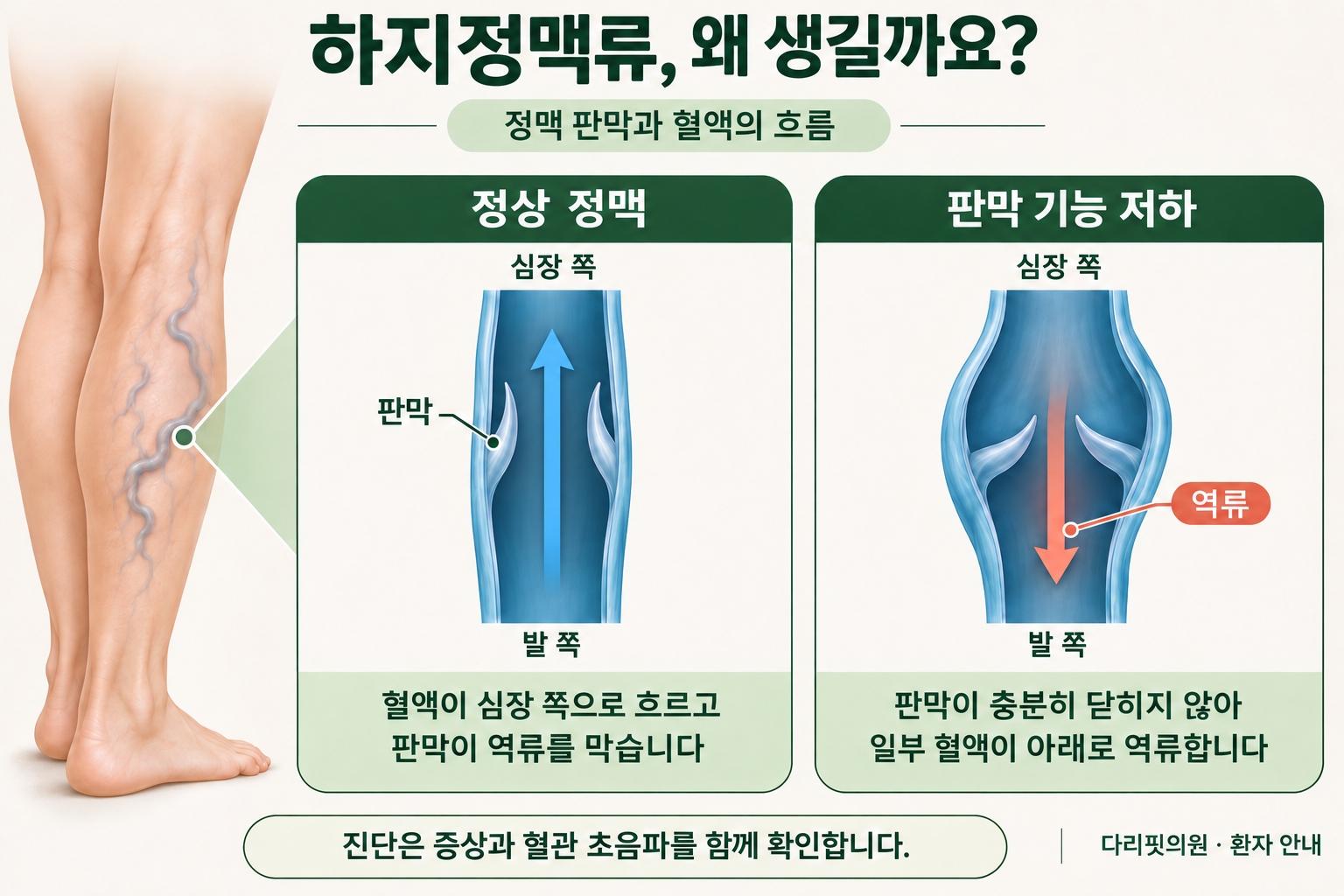
Vein stripping
Stripping removes a diseased segment of a saphenous vein. Duplex ultrasound helps us compare surgery with endovenous treatment and plan care for your symptoms and vein anatomy.
- Performed by a cardiothoracic and vascular surgeon
- Local anaesthesia for suitable patients
- An individual plan for surgery and recovery
 Open full-size image (new tab)
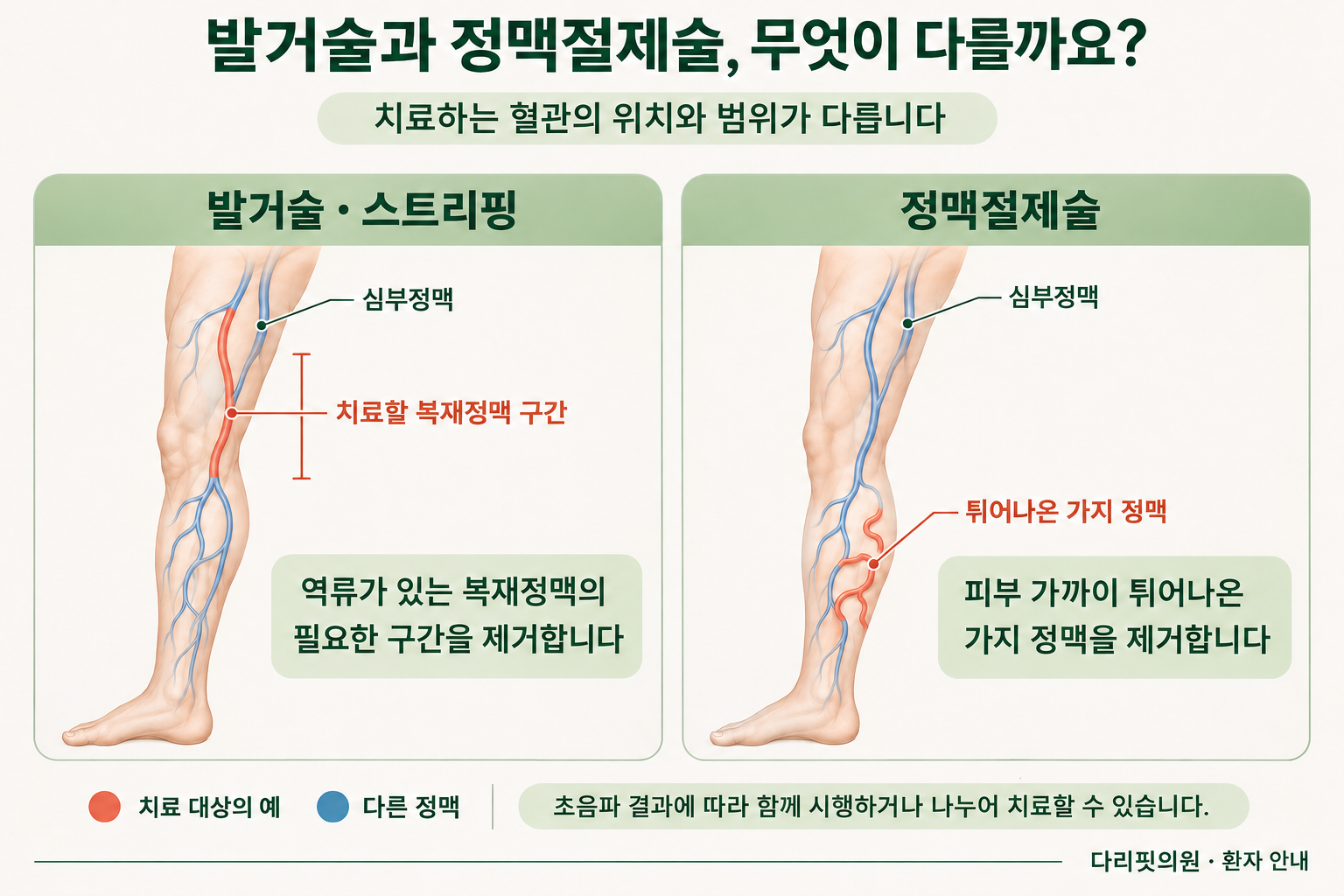
Stripping, phlebectomy and vein closure
 Open full-size image (new tab)
| Treatment | Veins treated and method |
|---|---|
| Stripping | Removes the required segment of a refluxing saphenous vein through incisions, with high ligation when appropriate. |
| Miniphlebectomy | Removes bulging tributary veins through small incisions. It may accompany stripping or endovenous treatment. |
| Endovenous closure | Closes a diseased vein from within, using methods such as laser, radiofrequency or adhesive. |
Stripping and phlebectomy both remove veins, but their targets and extent differ. Ask whether your plan treats a main saphenous vein, tributaries, or both.
When is stripping considered?
Symptoms and duplex findings are assessed together. Vein course, size and depth, deep-vein function, previous procedures and clot history matter.
International guidelines favour endovenous treatment for suitable patients. Stripping can be considered when anatomy or other clinical factors make endovenous treatment unsuitable. Cost alone should not determine the procedure.
Your surgeon and anaesthesia
Dr. Dongju Seo, a board-certified cardiothoracic and vascular surgeon, performs stripping at da Re-Fit Clinic. The veins to be treated and the extent of surgery are discussed at consultation.
Local anaesthesia is used for suitable patients. The anaesthetic plan and any need for sedation depend on the operation, medical conditions, medicines and anxiety.
Local anaesthesia does not mean no discomfort or automatically faster recovery. Walking, discharge and return to activities depend on your postoperative condition.
 About Dr. Dongju Seo
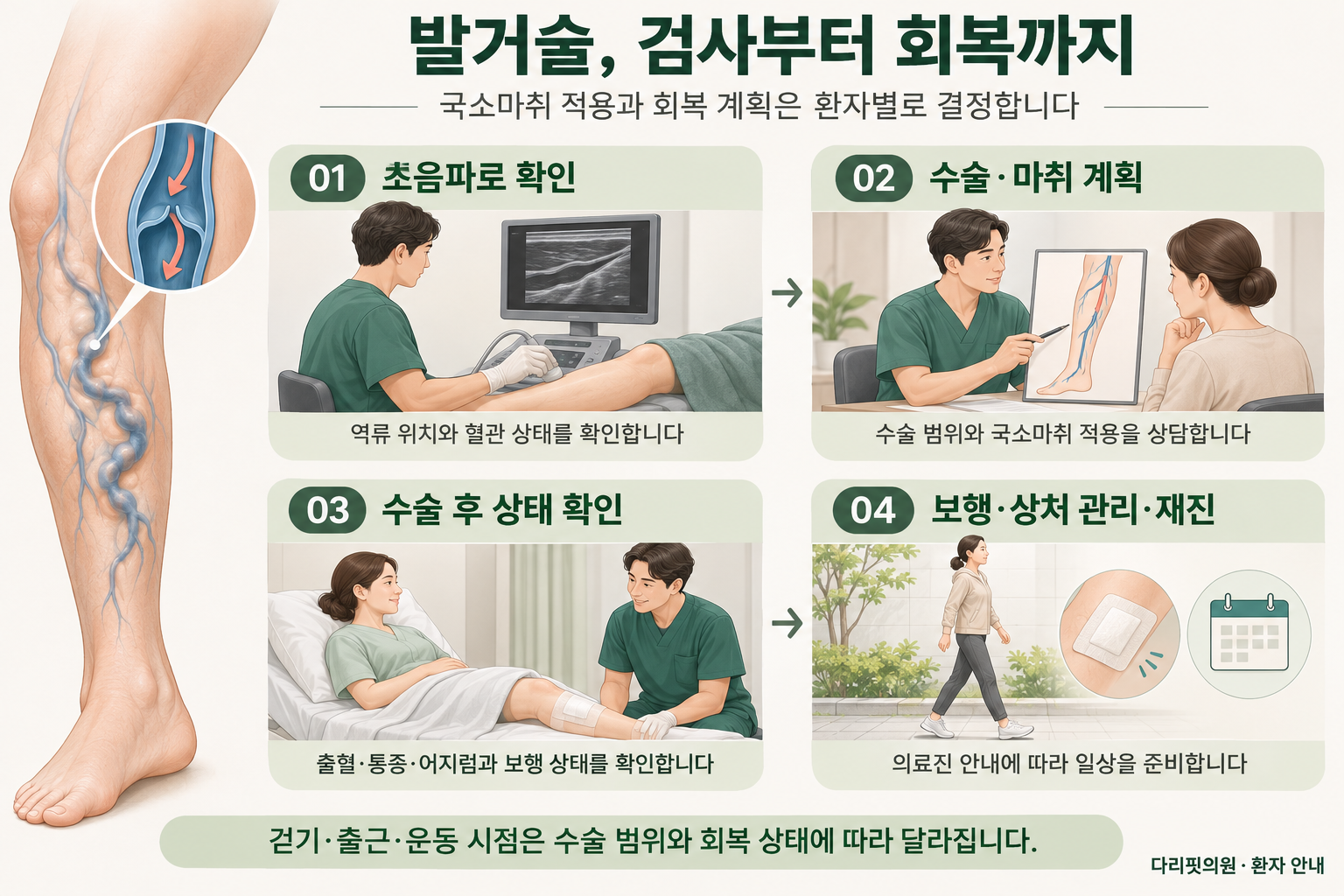
Walking and returning to daily activities
 Open full-size image (new tab)
After surgery, bleeding, pain, dizziness and walking ability are checked. Walking starts with the team's guidance. Same-day discharge cannot be promised for everyone.
Bruising, pulling sensations, pain, scars and altered sensation may occur; infection and blood clots are also possible. Wound care, compression and follow-up are tailored to your procedure.
Discuss standing work, driving, exercise and flights before surgery. Return dates depend on treatment extent, whether both legs are treated, and recovery.
Costs and insurance
Ask for an itemised estimate covering tests, surgery and anaesthesia, tributary treatment, compression and follow-up. One or both legs and treatment extent affect the cost.
Korean National Health Insurance eligibility and benefits are separate from private insurance reimbursement. Neither the name ‘stripping’ nor local anaesthesia guarantees payment or inpatient coverage.
Ask the clinic about expected charges and medical documents; check your policy, limits, deductible and required documents with your insurer. Treatment and admission depend on medical need. Overseas insurance requires separate confirmation.
Preparing for your consultation
Bring previous ultrasound or treatment records and note when symptoms began, when swelling or pain worsens, and any skin changes.
List medicines, supplements, allergies, clot history and other conditions. Do not stop anticoagulants without medical advice.
Share your work and travel plans and whether someone can accompany you, so postoperative arrangements can be discussed.
Common questions about stripping
Can I work immediately after local-anaesthetic stripping?
Anaesthesia alone cannot determine your return date. The extent of surgery, pain, bruising and how long you stand at work all matter.
Is stripping better than laser or radiofrequency?
No single procedure is best for everyone. Endovenous treatment may be preferred; stripping can be an alternative depending on anatomy and history.
Can both legs be treated on the same day?
The team considers treatment extent, general health, anaesthesia and support for walking and care before choosing simultaneous or staged treatment.
Does stripping guarantee insurance reimbursement?
No. Your insurer assesses the policy, treatment details and medical need for admission. This is separate from Korean National Health Insurance eligibility.
Can older patients have a consultation?
Yes. Age alone does not decide suitability; heart and lung function, medicines, mobility and other conditions are assessed.
Does recurrence mean I need stripping?
Ultrasound first identifies residual or recurrent reflux and other causes. Options may include surgery, endovenous treatment or sclerotherapy. Recurrence does not automatically require stripping.
Discuss a plan for your veins
A consultation can clarify whether stripping is suitable and how to plan anaesthesia and recovery.
Appointments and enquiries