Varicose Vein Care in Seoul
We assess your symptoms and vein ultrasound findings,
explain your options, and help you understand the next steps.
Dongju Seo, MD
Specialist in Cardiovascular Thoracic Surgery
Language support is available through our interpretation system.
Understand your options before making a decision.
Preparing Your Visit
Four things to settle before you travel.
Tell us about your symptoms and questions so we can advise whether a visit makes sense.
Confirm available dates and the language support you need.
Treatment is decided only after examination and ultrasound at the clinic.
Agree on follow-up checks and ongoing care before you leave Korea.
Whether treatment is suitable, how many visits you need, how long to stay in Seoul, and when you can fly are advised after an individual assessment. We do not promise same-day surgery, a fixed short stay, or immediate departure.
Self Check
Varicose veins can begin long before any veins bulge at the surface. Select any that apply to you.

How We Explain
Even with the same diagnosis of varicose veins, where reflux starts and how far it extends, the bulging veins, and the symptoms and skin differ from patient to patient. At da Re-Fit we review your ultrasound findings together with what is bothering you, and explain what we would treat and why.
How we decide on treatment →Duplex Ultrasound
We look beyond a single reflux time. Where reflux begins and how far it extends, the diameter and course of the vein, the branch varicosities and the state of the deep veins are checked together.
See the examination process →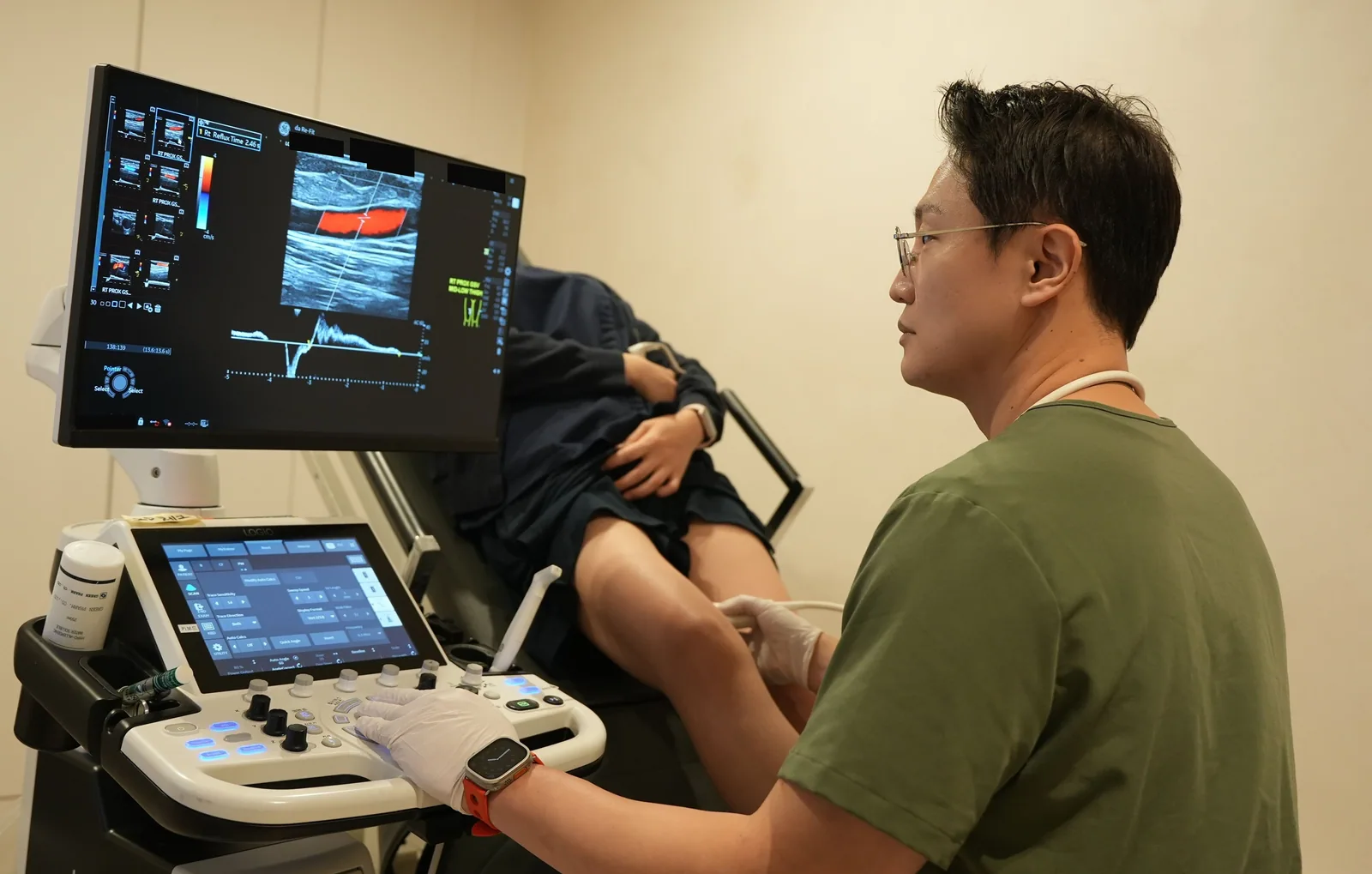
The One-Talkie Experience
One-Talkie — our in-house medical interpretation system
Our interpretation system supports communication during consultations and follow-up. Please contact us in advance about your language needs.
Medical Team
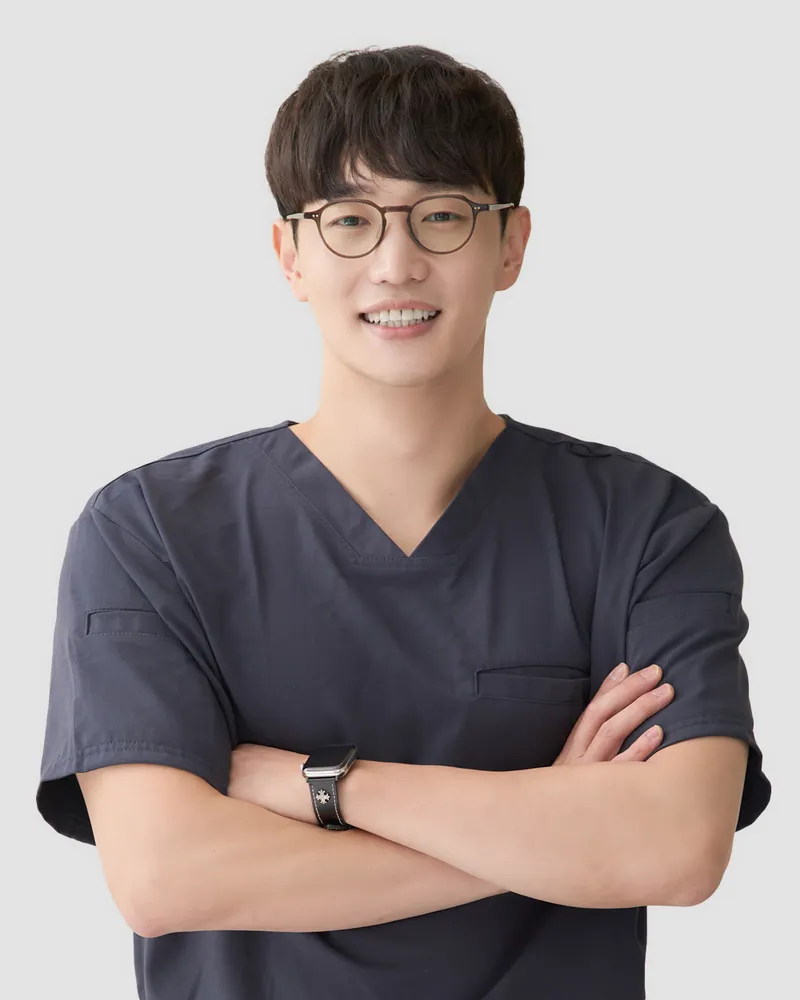
Cardiothoracic & Vascular Surgeon
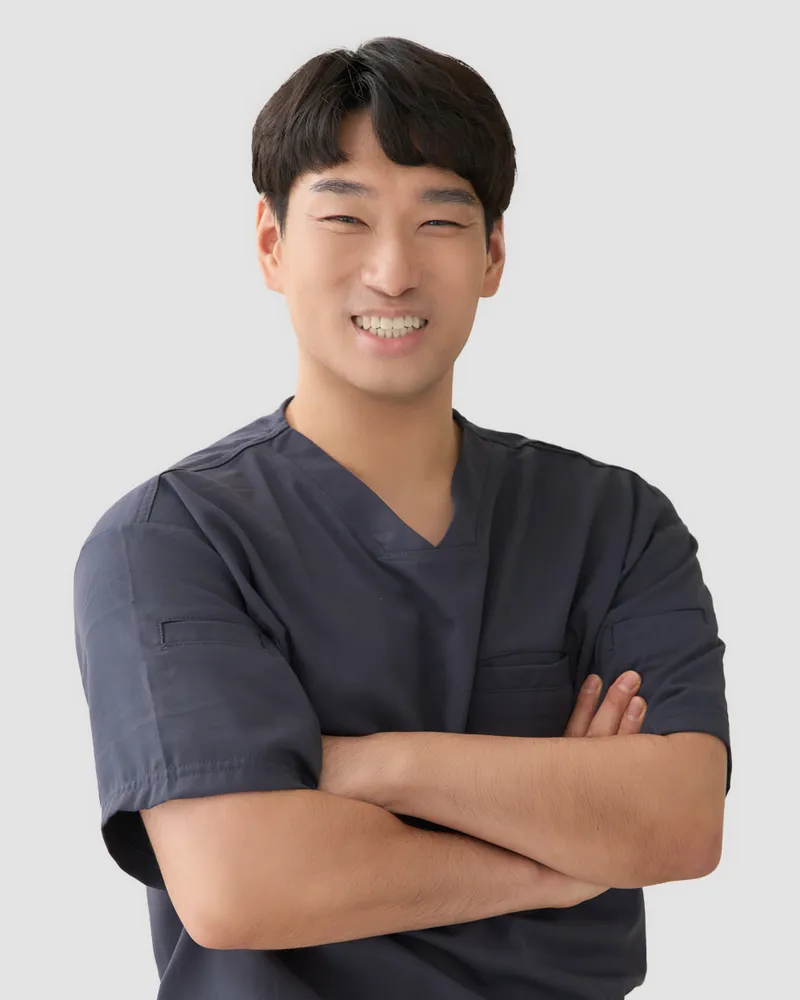
Cardiothoracic & Vascular Surgeon
From the ultrasound examination and treatment plan through to follow-up care, we guide each step according to your condition.
On the Day
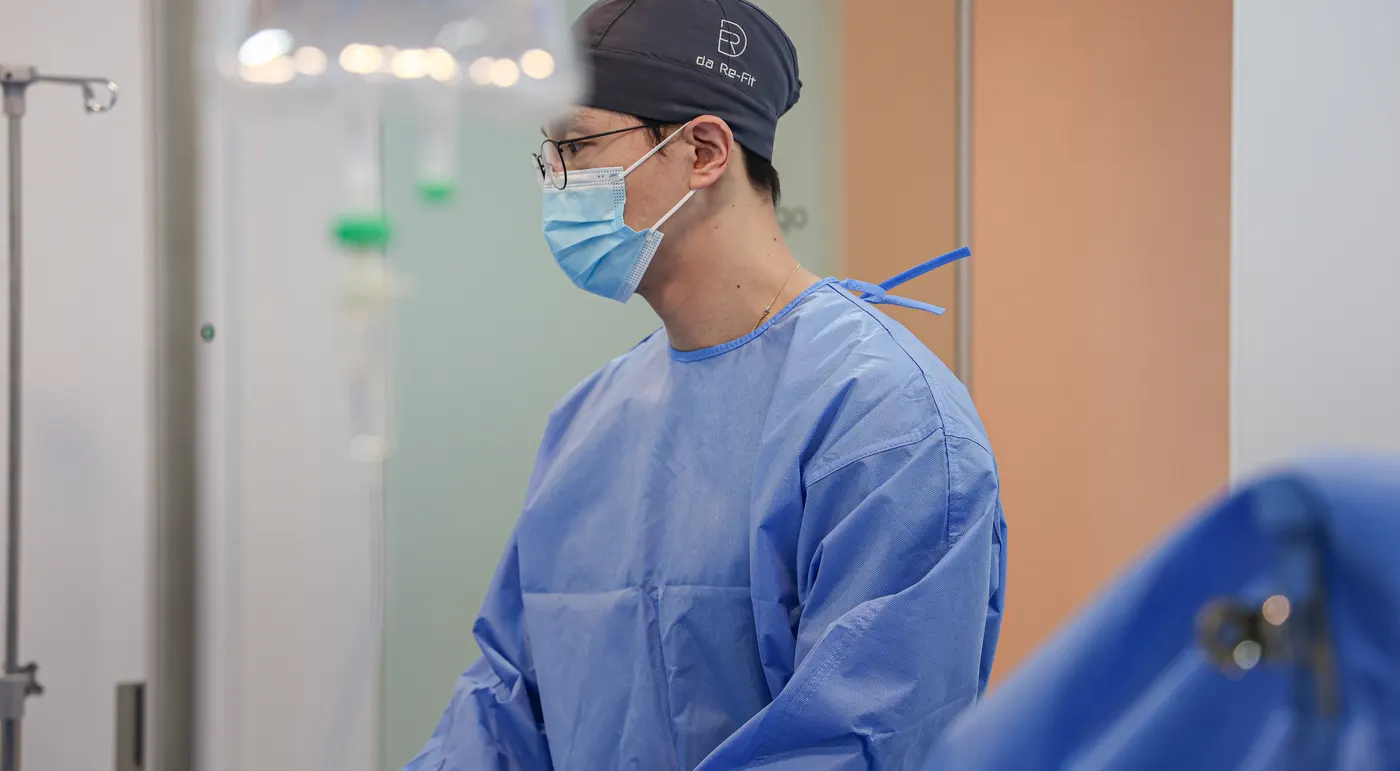
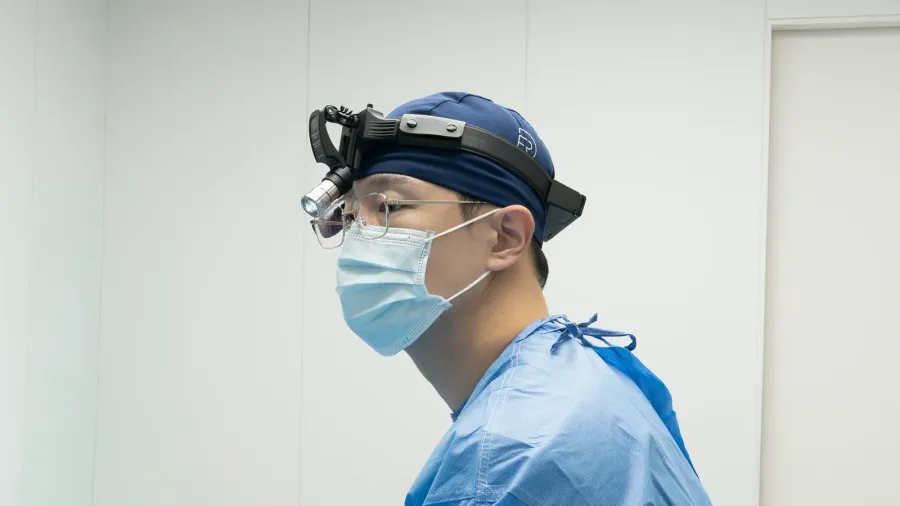
We review your symptoms and perform duplex ultrasound. The scan is done by the surgeon.
We go through your ultrasound images together and first decide whether treatment is needed at all.
Suitable options, expected recovery and costs are explained before you decide. Whether treatment on the same day is possible depends on individual assessment and the schedule.
We explain the schedule ahead, recovery and follow-up care.
Columns
Evidence-based insights on varicose veins — written by a board-certified vascular surgeon.
Laser, radiofrequency, VenaSeal, Flebogrif, phlebectomy, sclerotherapy. The diagnosis may be the same, but where the reflux starts, how the veins run, and what the symptoms and skin look like are not. Here is the order in which da Re-Fit Clinic decides the extent and method of treatment from ultrasound findings and symptoms.
2026-09-08Why KoreaFor international patients considering varicose vein treatment in Korea, the practical question is often: what does this actually involve?
2026-03-08Treatment OptionsYou have decided on treatment. Now the practical questions: how many days off work, when you can walk and exercise, how long bruising lasts. With current methods the return to daily life is usually quick — and randomised trials have measured recovery for several of them side by side.
2026-09-04Why da Re-Fit
What you can see on the surface does not show the extent of venous disease. We assess your ultrasound findings together with your symptoms to decide which veins to treat and how far. If discomfort remains after treatment, we look again for the cause, including residual venous disease, and discuss the treatment and care that may be needed.
The areas below describe the scope of care at da Re-Fit. They are not a grading of disease severity, nor a sequence every patient goes through. The treatment you need is decided individually.
TargetReflux in the great and small saphenous veins and other truncal veins
Where reflux is confirmed in a truncal vein, the method is chosen from thermal ablation (laser, radiofrequency) and non-thermal closure (VenaSeal, ClariVein, Flebogrif) according to vein size, course and your overall condition. Methods are chosen for suitability rather than ranked against each other, and can be combined in one session when needed.
Treating the Source Vein →TargetTributary varicosities below the trunk, and veins related to symptoms that remain after treatment
Bulging tributaries are treated with miniphlebectomy or ultrasound-guided sclerotherapy. If discomfort remains after treatment, we look again for the cause, including residual venous disease, and discuss the treatment and care that may be needed.
Treating the Branch Veins →TargetSpider veins, leg swelling, skin changes
Spider veins are treated with sclerotherapy or a 1064 nm laser. Swelling is managed with compression and other measures once its venous or lymphatic cause has been assessed. Laser treatment for skin tone is a cosmetic service and differs in purpose and effect from treating venous disease or swelling.
1064nm Laser for Leg Telangiectasia →Once the saphenous trunk is closed, many of the tributary varicosities below it shrink over time. So there is a decision to make: remove the tributaries the same day, or wait and treat only what remains. Randomised trials found the two approaches equivalent at five years, differing in the early recovery window — we go through the ultrasound findings with you and decide together.
Concomitant and staged treatment →Track Record
Board-certified surgeon trained at Asan Medical Center, Seoul
Clinical experience in cardiovascular surgery
Health program broadcast appearances
Peer-reviewed publications & international lectures
Research & Academics
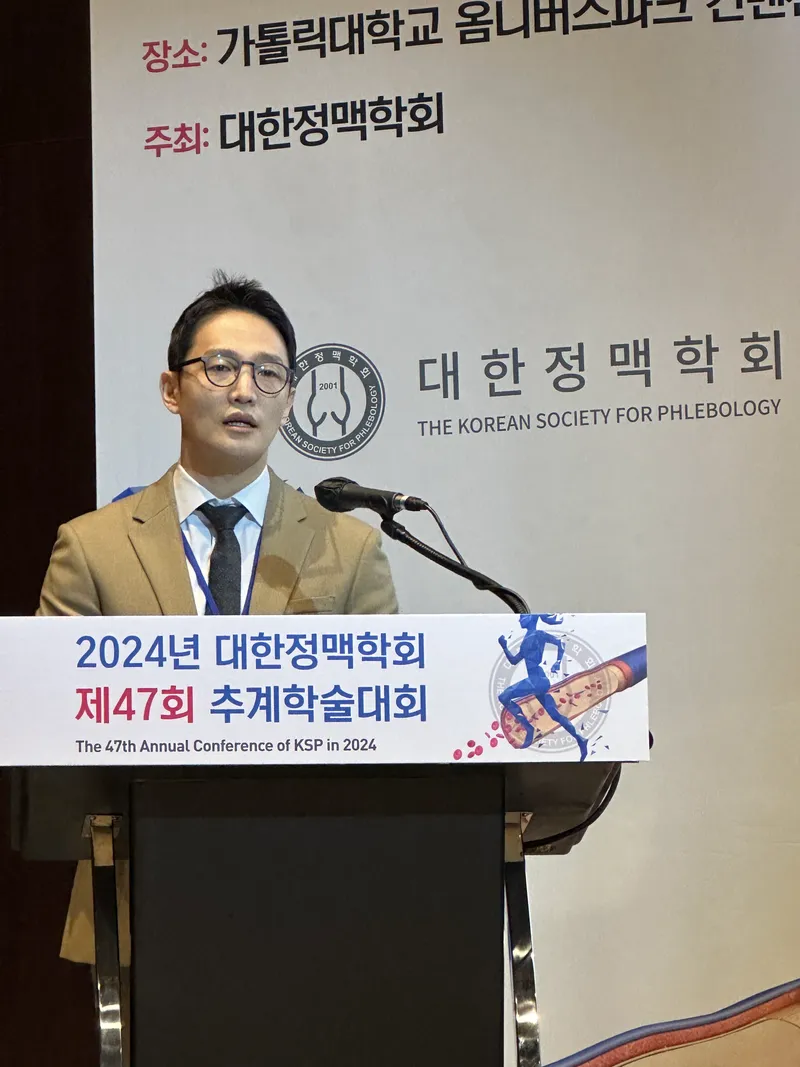
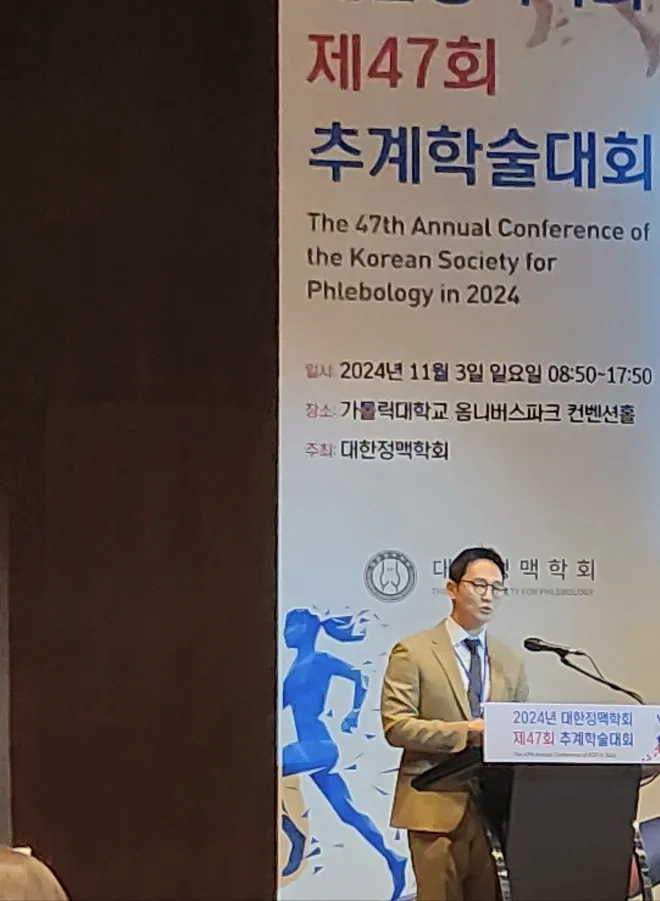
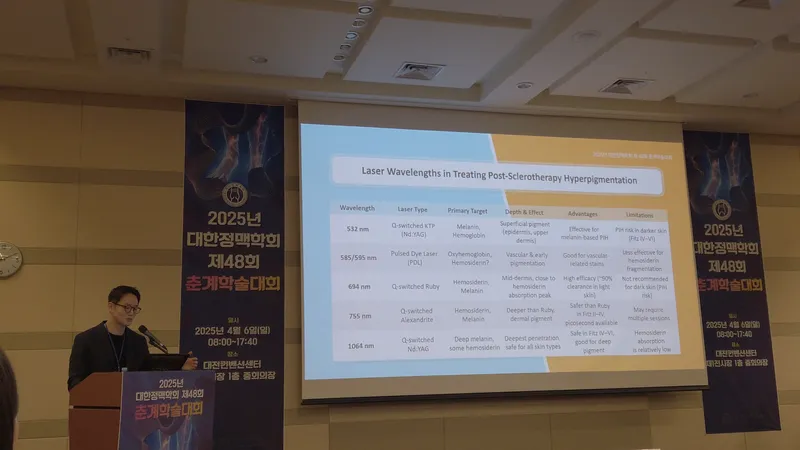
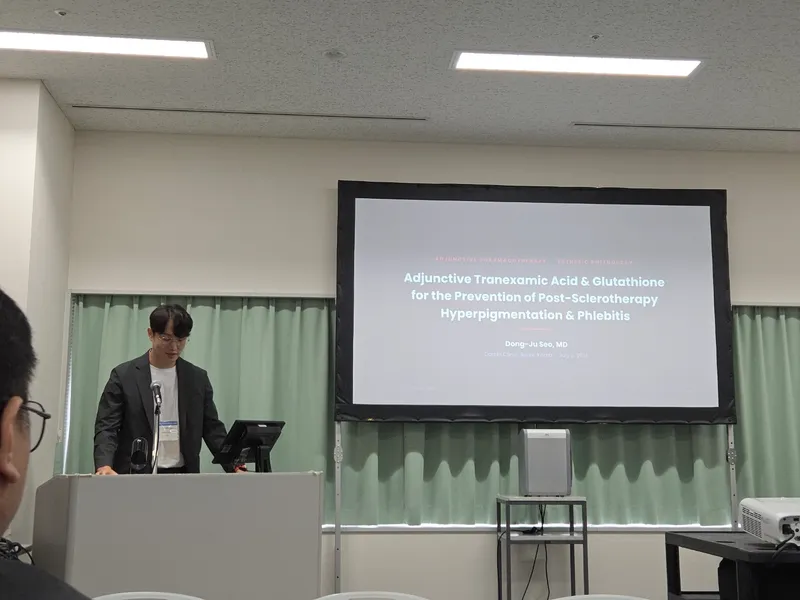
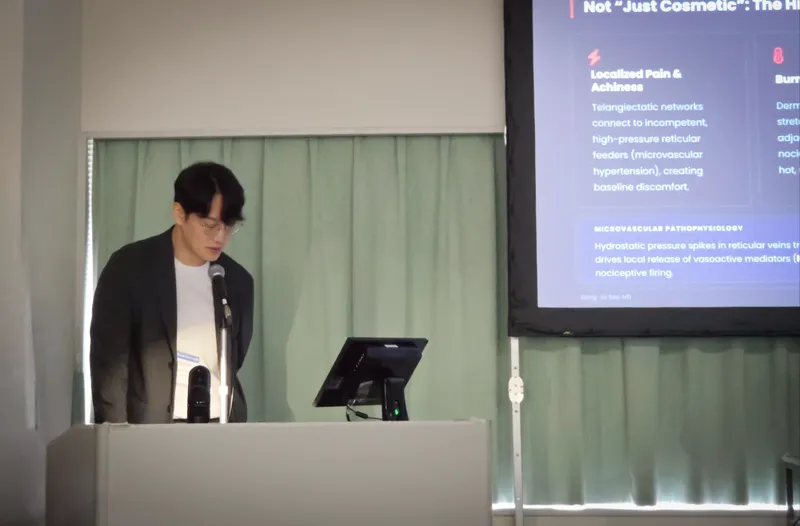
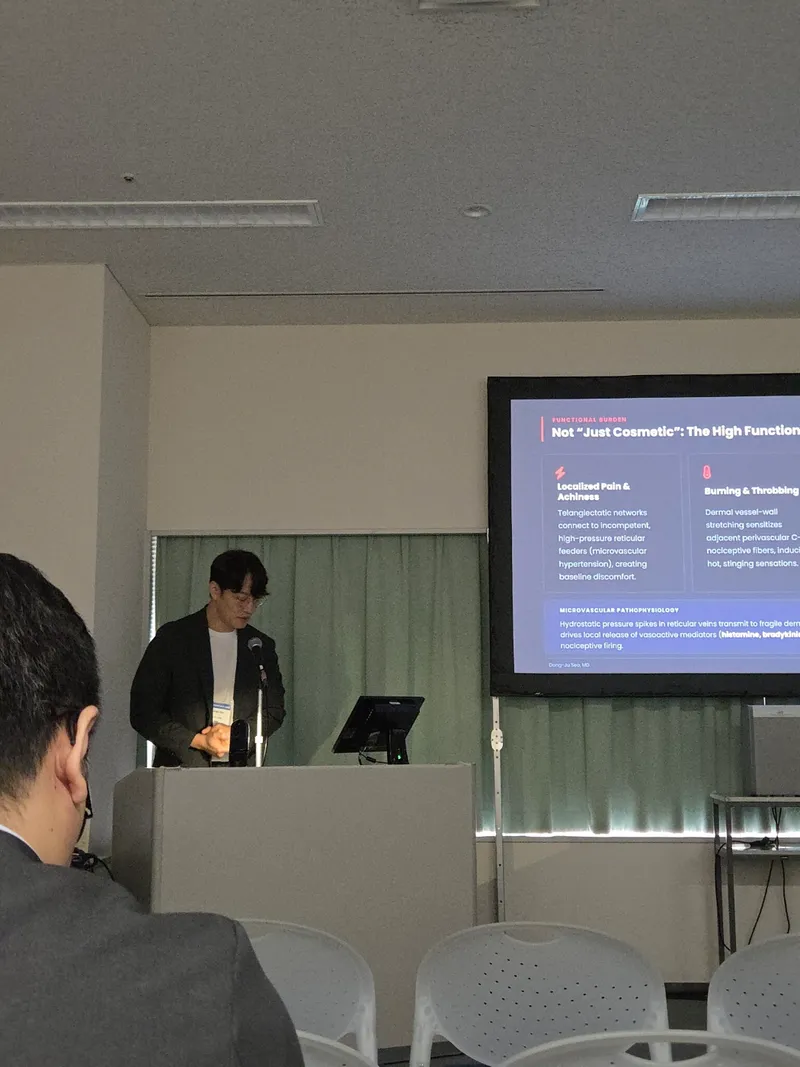
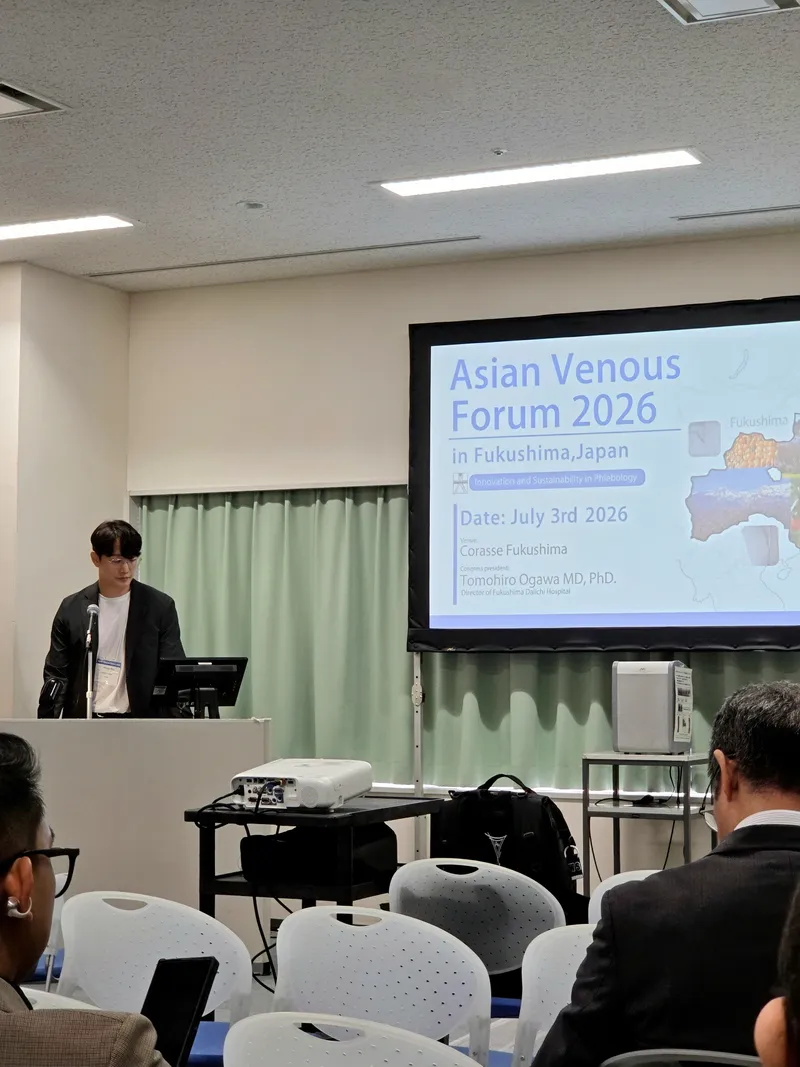
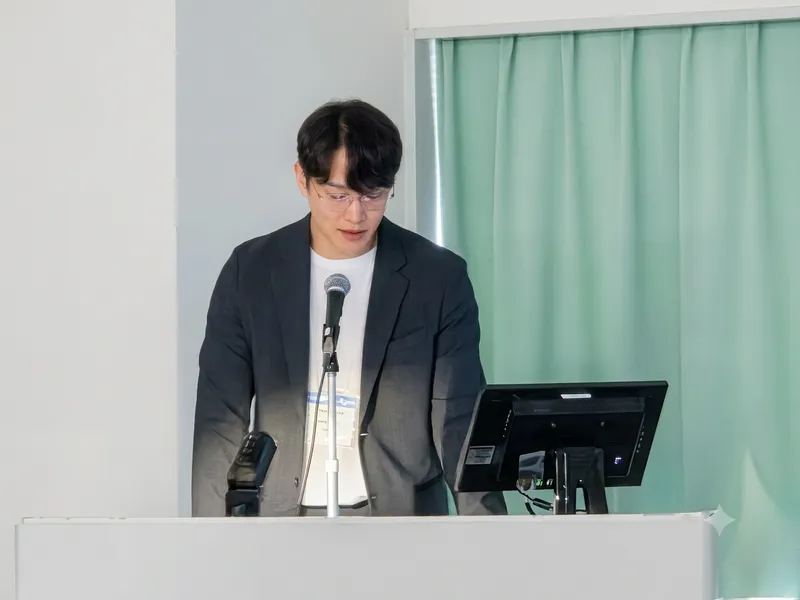
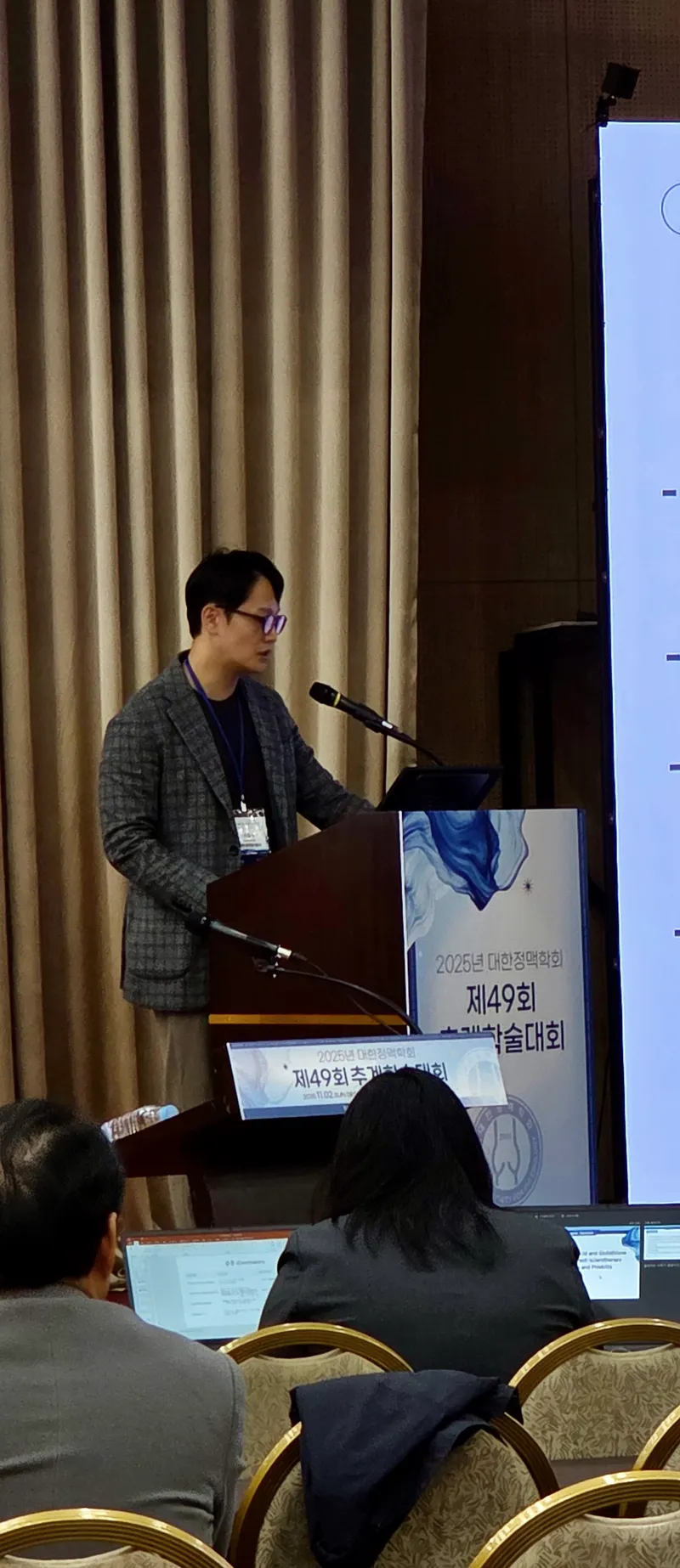
da Re-Fit continues to research from its clinical experience and shares it through presentations at academic conferences.
FAQ
Visit
Content Channels
The All-Leg Symptoms
 da Re-Fit