 da Re-Fit Clinic
Safety
We begin with
what can go wrong.
Rib remodeling may cause complications involving chest-wall structures. Below are possible problems, symptoms, timing and management. The aim is to help you know what to watch for and when to contact the medical team.
Complications
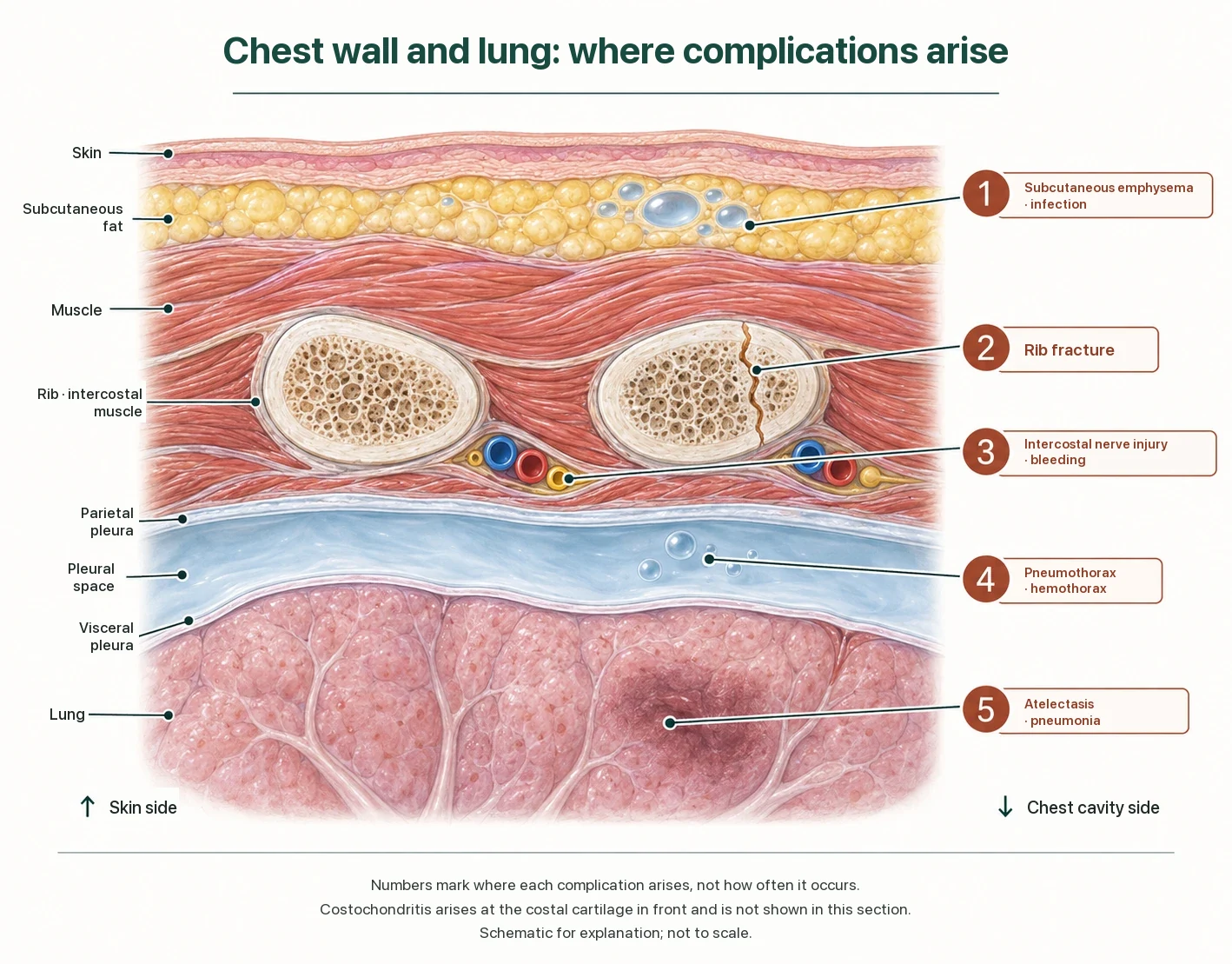
Pneumothorax
- Symptoms
- Sudden chest pain, breathlessness and dry cough.
- Timing
- Usually during or immediately after surgery; rarely hours to days later.
- Management
- Confirmed by chest imaging. A small, asymptomatic pneumothorax may be observed with oxygen while it resolves. A larger one or breathing difficulty may require a chest tube to remove air.
Hemothorax
- Symptoms
- Chest pain, breathlessness, pallor and dizziness.
- Timing
- During or immediately after surgery.
- Management
- Confirmed by imaging and drained with a chest tube. Ongoing bleeding may require surgical hemostasis.
Rib fracture
- Distinction
- An unplanned fracture, rather than the incomplete fracture deliberately created during surgery.
- Symptoms
- Localised pain, pain worsened by inhalation and tenderness to pressure.
- Timing
- During surgery or recovery.
- Management
- Confirmed by imaging. Most unite with pain control and activity restrictions. Fixation may be considered for substantial displacement or multiple fractures.
Intercostal nerve injury
- Symptoms
- Stabbing or burning pain, tingling and reduced sensation, typically in a band along a rib.
- Timing
- Usually from immediately after surgery to several weeks later. Persistent symptoms may become chronic.
- Management
- Managed with medication and nerve blocks. Recovery can take months and may be incomplete.
Costochondritis
- Symptoms
- Pain and tenderness over costal cartilage, worsened by movement or coughing.
- Timing
- During recovery.
- Management
- Most cases improve with anti-inflammatory analgesia and activity modification.
Subcutaneous emphysema
- Symptoms
- Swelling beneath the skin with a crackling sensation on pressure.
- Timing
- Immediately after surgery.
- Management
- Usually resolves spontaneously. If it spreads, coexisting pneumothorax must be checked.
Atelectasis and pneumonia
- Symptoms
- Fever, cough and breathlessness.
- Timing
- Early recovery.
- Management
- Severe pain and shallow breathing increase risk. Adequate pain control and deep-breathing exercises are central to prevention.
Infection
- Symptoms
- Redness, warmth, swelling, fever and discharge.
- Timing
- Usually 1–2 weeks after surgery.
- Management
- Treated with antibiotics. Deep infection may require drainage.
Asymmetry or dissatisfaction with shape
- Symptoms
- Side-to-side differences or an unexpected contour.
- Timing
- Weeks to months after swelling subsides.
- Management
- Assessment is deferred while swelling resolves and tissues settle. Final evaluation is made after sufficient time.
This list covers complications known across procedures involving the chest wall. Types and degrees of risk vary with the technique and individual condition. Discuss the specific risks relevant to you before surgery.
These are familiar situations in thoracic surgery.
The complications listed above are encountered in thoracic surgical practice. Chest-tube insertion, pleural procedures, intercostal nerve blocks and assessment and fixation of rib fractures are included in specialist training.
Pneumothorax requires recognition and experience with chest-tube insertion. The premise of this care is that a clinician who works on the chest wall must also be able to manage problems beneath it.
Care
Care does not end with surgery.
Chest-wall shape is not final immediately after surgery. Tissue adaptation and resolution of swelling take weeks to months, and care during this period influences the final result.
Progress is assessed on a planned schedule with repeat measurements and imaging. Adherence to the compression protocol and activity restrictions is also reviewed. If you cannot attend this follow-up schedule, it is better to postpone surgery.